About
Shahrukh Athar
From building systems to studying the system doing the building.
Behaviour has structure.
Shahrukh Athar’s work treats behaviour as structure: elicitation, decision patterns, values, beliefs and language, drawn from Neuro-Linguistic Programming and read through systems thinking — feedback loops, state, constraints and outputs.
It is not therapy, motivational coaching or persuasion. Before changing a behaviour, find the structure producing it.
What the work is — and is not.
- Elicitation
- Decision patterns
- Values
- Beliefs
- Language
- Therapy
- Motivational coaching
- Persuasion
Human behaviour. Made observable.
Background and training
- Biography
Shahrukh Athar works at the intersection of technology, systems thinking, and human behaviour. The practice centres on making invisible behavioural patterns observable — through elicitation, language analysis, and the frameworks drawn from Neuro-Linguistic Programming.
The shift wasn’t gradual. It happened when the same analytical instinct — the one used to trace why software behaved unexpectedly — turned toward why people behaved unexpectedly. Including the person doing the analysis.
- Training
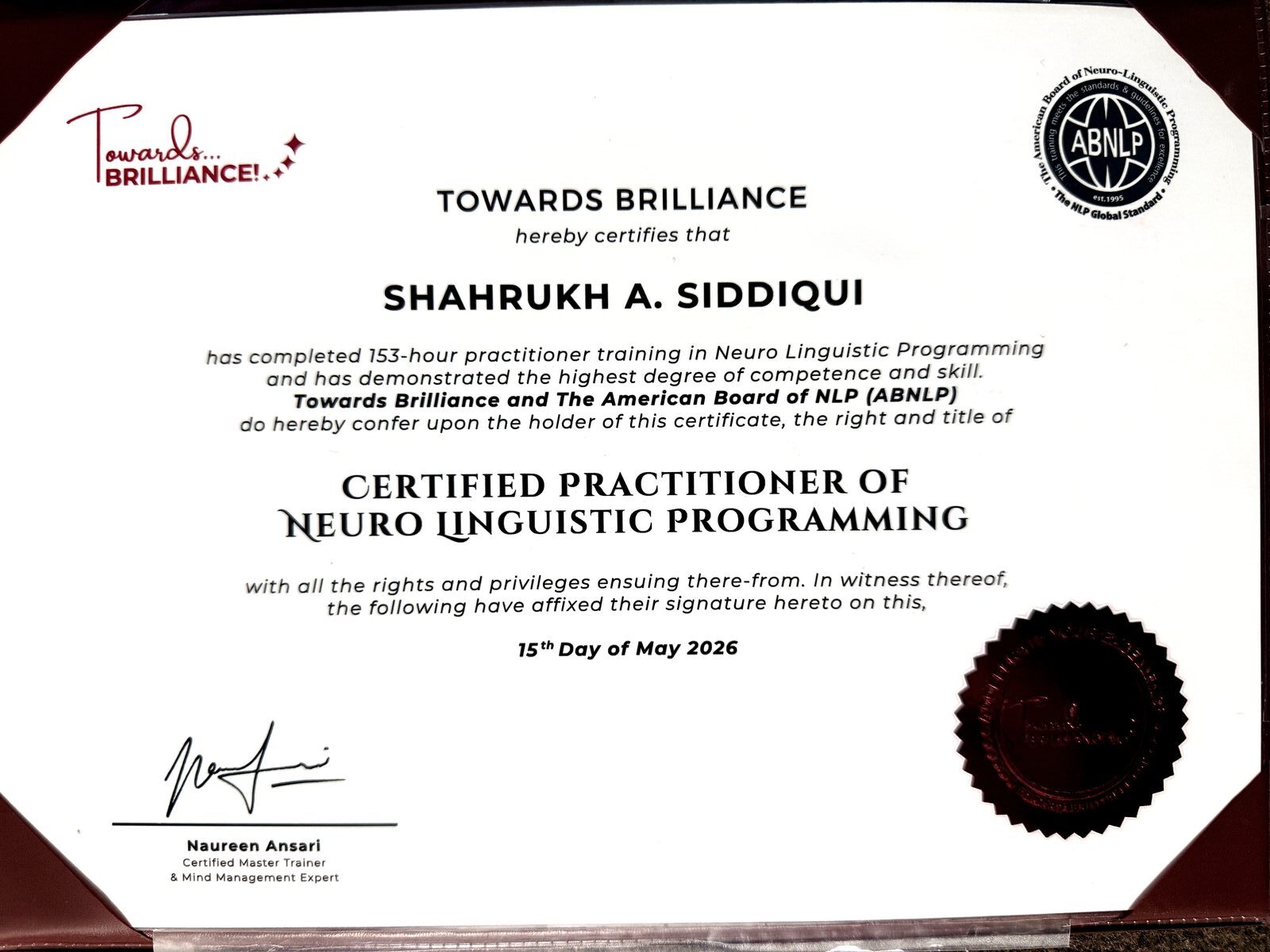
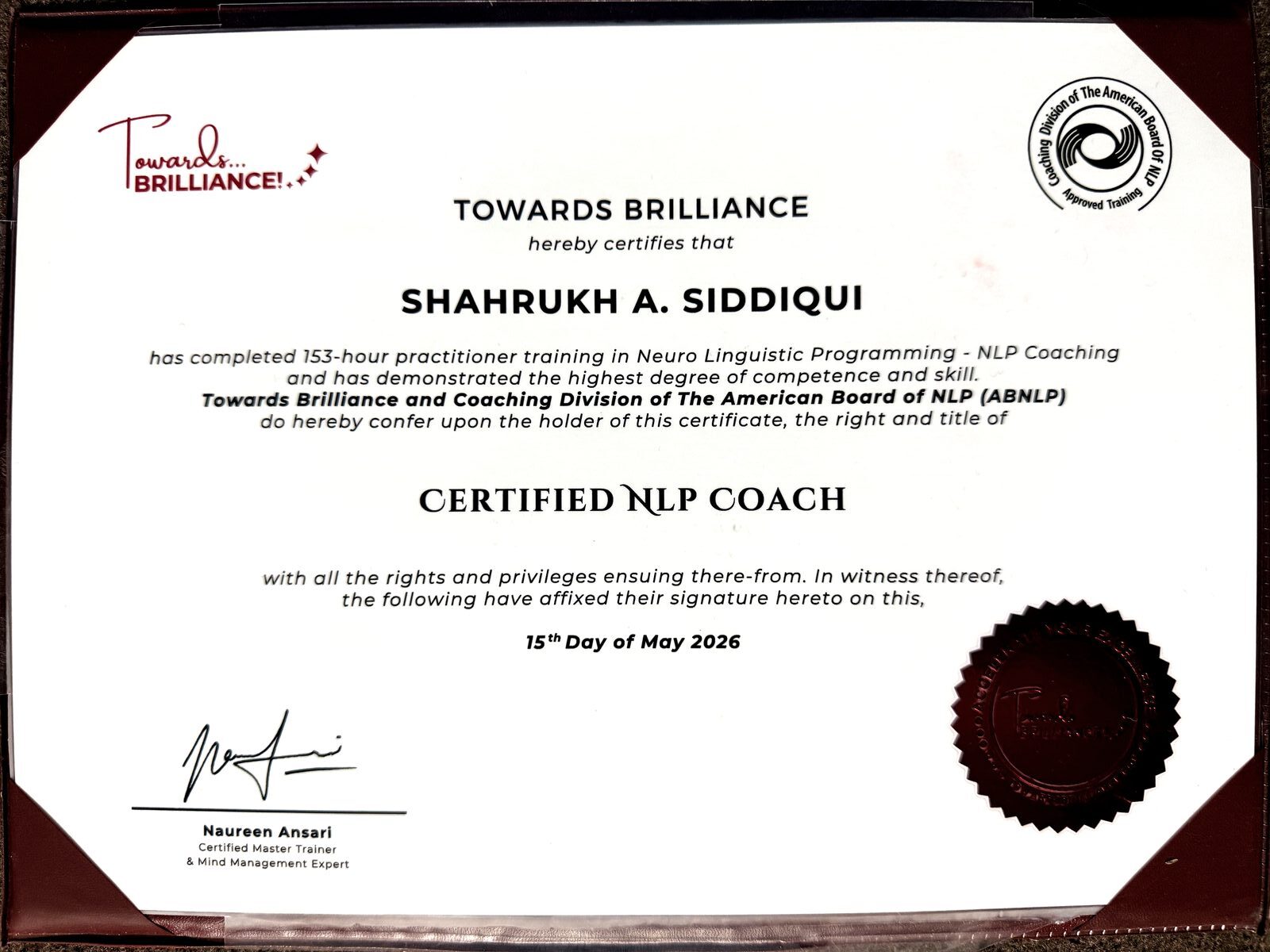
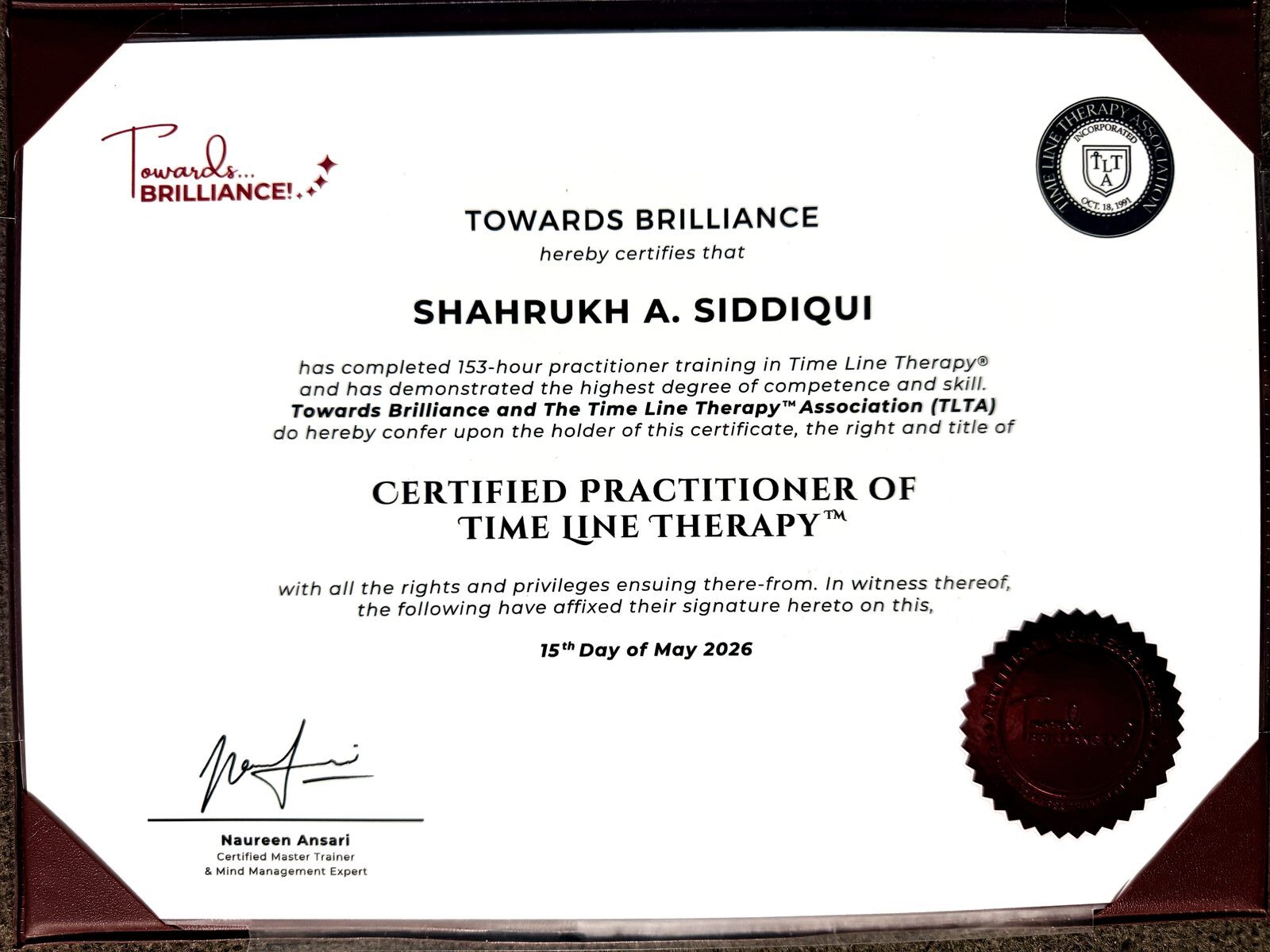
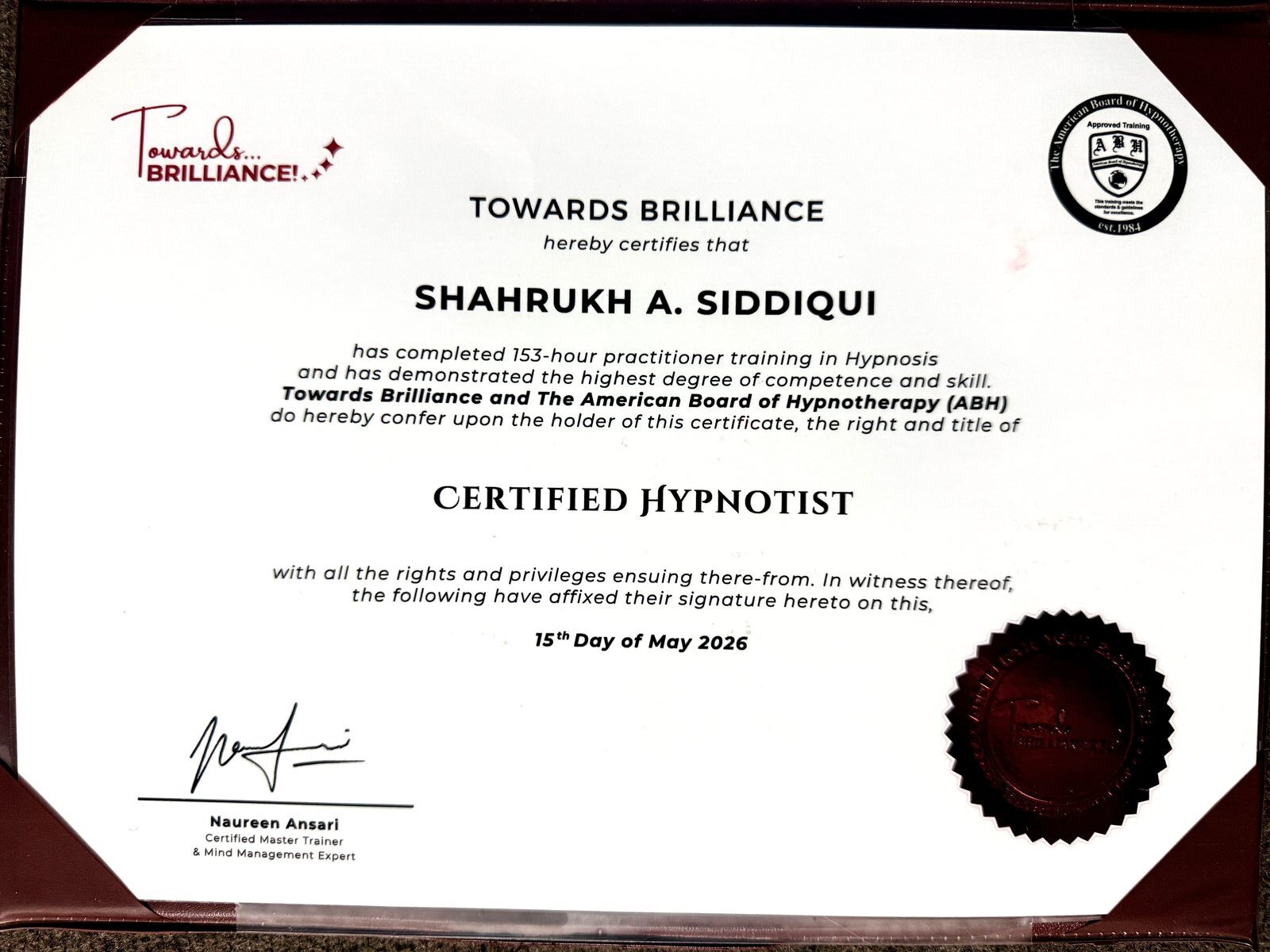
Practitioner and Master Practitioner — NLP, Time Line Therapy™, Hypnotherapy, NLP Coaching, Energy Management.
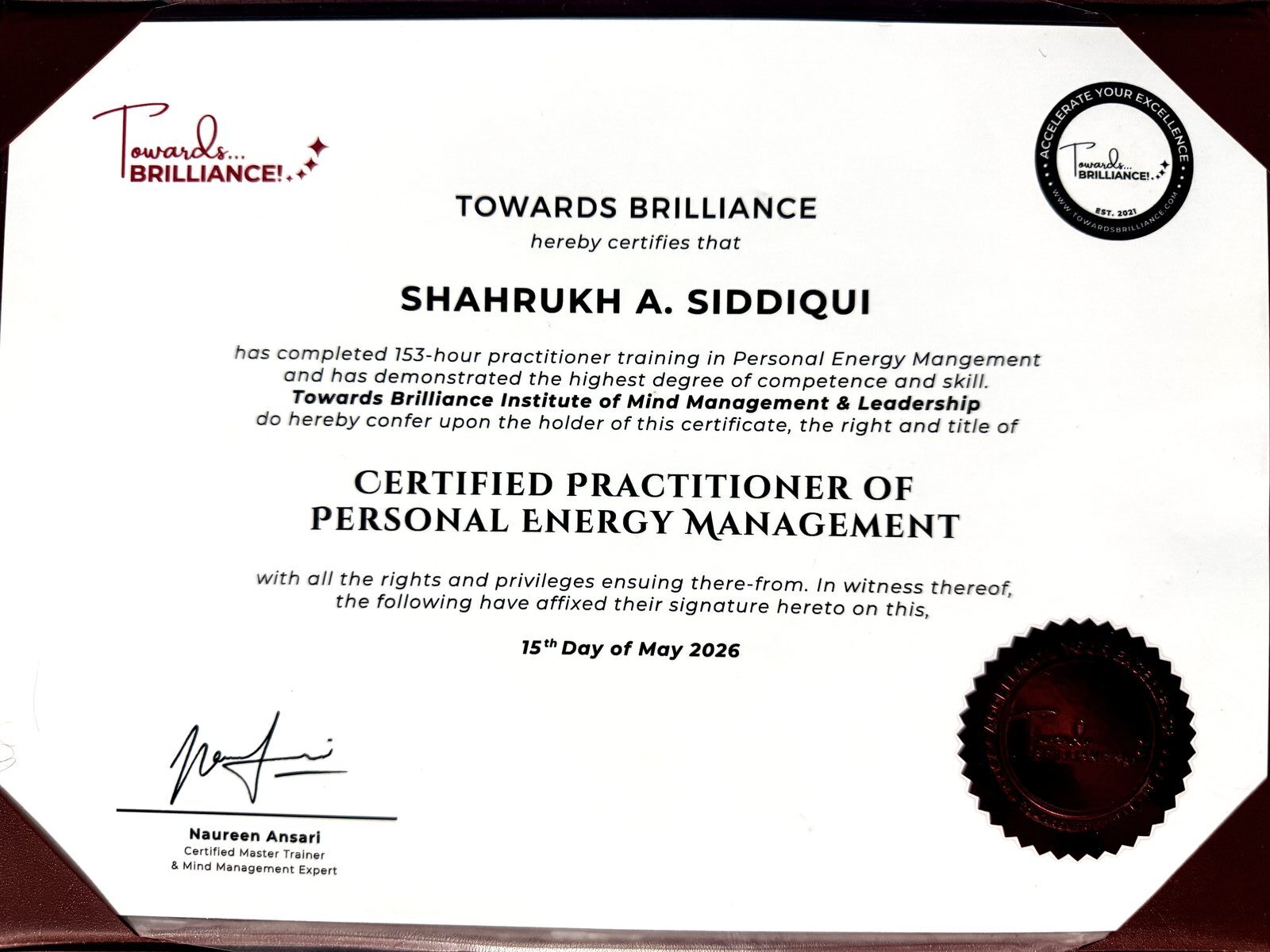
ABNLP / TLTA / ABH, 2026 — 153-hour training through Towards Brilliance Institute under Naureen Ansari.
- Practice
Rooted in Neuro-Linguistic Programming. Informed by systems thinking. Tested through practice.
The instinct to intervene is almost always premature. The better move — nearly every time — is to stay with the observation a little longer.
Twelve ways of seeing structure
- Decision PatternsDECISION MAKING
- ValuesMOTIVATION
- BeliefsIDENTITY
- Language PatternsCOMMUNICATION
- Meta ProgramsCOGNITIVE FILTERS
- Perceptual PositionsPERSPECTIVE
- Timeline TherapyTEMPORAL PATTERNS
- SubmodalitiesINTERNAL REPRESENTATIONS
- Strategy ElicitationBEHAVIOURAL SEQUENCES
- Representational SystemsSENSORY PROCESSING
- TPDK FrameworkORGANIZATIONAL TRANSFORMATION
- AnchoringSTATE MANAGEMENT